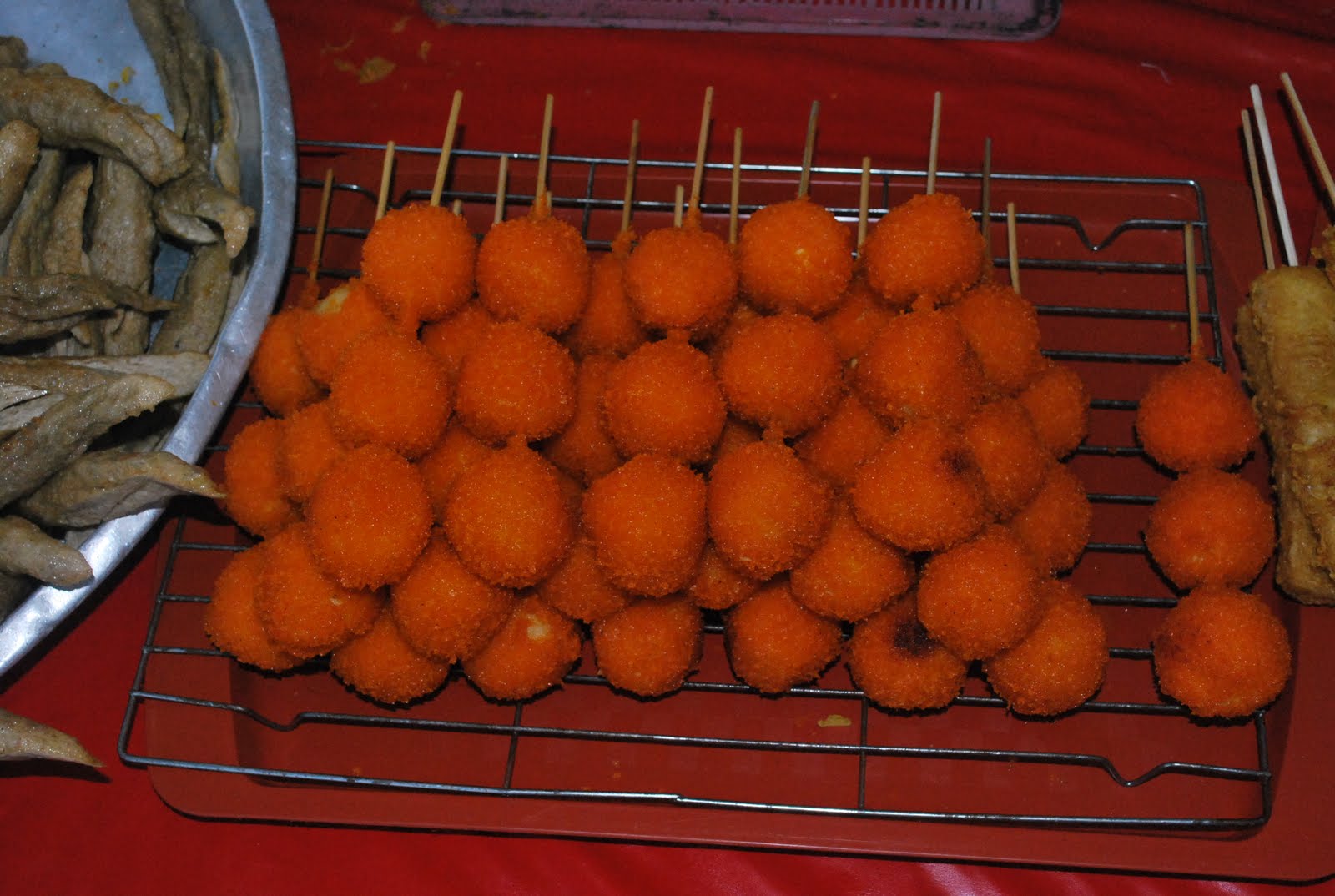
Keropok Lekor is synonymous to Terengganu. Keropok is a snack eaten by Terengganu folks in the evening. Now, keropok can be eaten at any time. Those days, we can only eat during the evening because the fisherman come back with fish in the evening. I remembered when I was small, I can only eat keropok lekor during dusk or during sunset.
Keropok lekor is a mixed of sago, fish paste, pinch of salt and sugar. First, the fish is cleaned, all bones were rid of, pounded with "alu lesong" (mortar) and mixed with the right amount of sago flour. Then, the paste is divided into small portions. Each small portion is rolled and shaped like a long hot dog and thrown into the boiling water. Once the keropok lekor is floating in the boiling water, it is considered cooked. Then, they were scooped into the net and put into a big bamboo basket for cooling.
The standard sign board in Losong.
Now with the new technology, you don't have to pound the fish, the machine will do it. For the mixing, the machine will do it. But for the rolling, most keropok lekor is still done by hands.
To most Terengganu's experienced keropok lekor maker, they boil the keropok not with the gas, but with the wood. This give different taste to the keropok.
The fish paste or dough is put in the blue container.
The dough being compacted for better shape into sausage.
The roll keropok lekor before being boil.
The boiling keropok lekor. The floating ones are considered cooked.
Keropok lekor is eaten fresh or fried and served with chilli sauce. Some people like to eat fresh and some like it stir fry. You must try eating the boiled ones. This keropok lekor can be preserved in the fridge for a few days. When you want to eat it, take out from your fridge, thaw it and fry. Should you find, the keropok lekor becomes sticky, you can wash them and boil again for a few minutes. Then, fry them.
The sauce looks so tempting...
The keropok keping is packed in the plastic packaging.
Keropok lekor too, can be turned into keropok keping (crackers). The long keropok is sliced and dried in the hot sun for many days. Once it is dried, you can fry and it become fish crackers. Normally, to make fish crackers, they will mix more sago flour with fish. This crackers can be a substitute to fresh fish during the rainy days when the fisherman can not go out to the sea. The crackers are also served like biscuits when you serve your guests. My mother used to fry the keropok keping and stored them in the big glass container. When the guests come, they were served with this keropok keping and black coffee.
Talking about the colour of the keropok lekor, if you see it is dark, it means the keropok has more fish. But now the keropok lekor is getting whiter because they mix the "fish dough" with the ice. Mixing with ice will give pale colour or mixing with other non-sago like kanji (starch) will also give pale colour. For the keropok keping, the kind of fish will give lighter colour.
Keropok lekor now has becomes an industry by itself. Tons of them are being exported to Kuala Lumpur and other parts of the country. The famous traditional keropok lekor makers in Terengganu are concentrated in Kampong Losong Hj Su Kuala Terengganu (Jalan Kuala Hiliran). Losong is the place name on the way to the Terengganu Museum. However, there are many other outlet outside Losong that make keropok. One of them is Keropok Lekor Bukit Tok Beng (BTB). It is located in Bukit Tok Beng, on the way to the Kuala Terengganu Airport. Because of its popularity among patrons, you need to queue. The Terengganu government through Entrepreneur Foundation is giving Terengganu's Keropok lekor new brand name as T-lekor (T means Terengganu) and you can find them in big supermarkets. Happy Travelling